Straight Answers
Why This Is Different
Most methylation supplements address the methylation cycle by adding more methyl groups. Methylfolate. Methylcobalamin. Active B vitamins feeding the cycle from one direction. That is a legitimate approach and those nutrients matter.
DBAMTHFR does something different. Rather than adding more methyl groups directly, the formula addresses the upstream conditions that allow the body to produce and use methyl groups more efficiently on its own. That includes reducing the body's daily methylation demand, supporting glutathione synthesis at the assembly step nobody discusses, and providing the raw substrate the cycle actually runs on.
It is the difference between giving someone more fuel and fixing the engine that burns it.
The Drain Nobody Talks About
The body's largest daily consumer of methyl groups is creatine synthesis. By some estimates, 40 to 80 percent of the body's total daily methylation expenditure goes toward making creatine endogenously. Every gram of creatine the body synthesizes from scratch costs methyl groups that could otherwise flow to neurotransmitter regulation, hormone clearance, DNA stability, and detoxification.
When creatine is supplemented directly, the body downregulates endogenous synthesis. The methylation expenditure freed up is significant. That freed capacity flows downstream to every other process methylation supports.
This is one of the most underappreciated pieces of methylation biochemistry. Most formulas overlook it entirely. DBAMTHFR is built around it.
The Glycine Gap
Glycine is the smallest amino acid and one of the most universally deficient in modern diets. The body needs glycine for collagen synthesis, glutathione assembly, bile acid production, sleep regulation, inhibitory neurotransmission, and a dozen other functions. The body can synthesize about three grams per day. Total daily requirement under normal metabolic conditions runs ten to fifteen grams.
That structural gap of seven to twelve grams per day is filled in ancestral diets by connective tissue, bone broth, skin-on preparations, and organ meats. The modern diet of muscle meat without those elements leaves the gap unfilled. Almost everyone is running a glycine deficit and almost nobody knows it.
Glutathione, the body's master antioxidant, is assembled from three amino acids: glutamate, cysteine, and glycine. Most supplements focus on the cysteine step. Research has shown that in populations with glycine depletion, glycine becomes the actual bottleneck. Cysteine without glycine produces an intermediate that cannot complete the tripeptide.
DBAMTHFR addresses both.
The Bypass Route
The methylation cycle has two routes for converting homocysteine back to methionine. The MTHFR route, which depends on the enzyme reduced by common gene variants. And the BHMT route, which uses TMG to donate methyl groups through a completely separate pathway that does not require the MTHFR enzyme at all.
TMG is not a replacement for MTHFR. It is an alternate highway when the main road is congested.
For people with MTHFR variants whose primary route runs at reduced capacity, the bypass is meaningful. For people without variants, it is additional capacity in the system.
This Is Not Just For MTHFR People
The name of the formula references MTHFR because that is the most well-known entry point into methylation conversations. But the formula is not exclusive to people with confirmed MTHFR variants.
The methylation cycle runs in every human body regardless of genetics. Everyone depends on it for energy production, mood regulation, cellular repair, immune function, hormone clearance, and detoxification. What MTHFR variants do is reduce the margin — the difference between what the system needs and what it has available.
MTHFR variants do not create the problem. They reduce the margin for absorbing the problem.
What Everyone Is Running
Every human body is synthesizing creatine endogenously every day, consuming the majority of its daily methyl group production in the process. This expenditure is not optional. It is the largest single use of methyl groups in human biology and it runs in every person regardless of MTHFR status.
Every modern diet is low in glycine compared to ancestral baselines. The shift away from nose-to-tail eating, away from bone broths, away from connective tissue and organ meats has produced a glycine gap of seven to twelve grams per day in most people. This gap exists whether someone carries an MTHFR variant or not.
Every modern environment includes glyphosate exposure that disrupts the gut microbiome's production of tryptophan and chelates the manganese required for folate cycle enzyme function. This exposure is universal across food supplies in heavily agricultural countries.
Every adult is producing less SAM-dependent methylation activity than they were in their twenties. Methylation capacity declines naturally with age regardless of starting genetics.
Every person under chronic stress is depleting their methyl pool through cortisol-driven competing demands. The pace of modern life produces a continuous low-grade drain on the same substrate the sulfation pathway depends on.
The Practical Translation
Someone with two perfectly functioning MTHFR genes is still spending 40 to 80 percent of their daily methyl groups on creatine synthesis. They are still eating a glycine-deficient modern diet. They are still being exposed to glyphosate. They are still aging. They are still managing stress that drains their SAM pool.
DBAMTHFR addresses all of those drains and deficits regardless of MTHFR genotype. The variant determines how desperately the corrections are needed. It does not determine whether they are needed at all.
The floor matters for everyone. Not just people with a specific gene variant.
How It Actually Works
The simplest way to understand DBAMTHFR is through one image. Most people are operating with a full tank that has a hole in it. The standard supplement approach is to keep filling the tank faster. DBAMTHFR patches the hole and refills the tank at the substrate level.
A person without an MTHFR variant has a full tank but a hole in it. The standard supplement approach is a slower drain. DBAMTHFR patches the hole and refills the tank.
The formula does three things simultaneously.
First: It Stops the Largest Daily Drain
Creatine synthesis is the body's largest single consumer of methyl groups. Supplementing creatine directly reduces endogenous synthesis demand, freeing up methylation capacity that flows downstream to every other process that needs it. This is the most under-discussed methylation intervention available and one of the central mechanisms behind why the formula works.
Second: It Restores the Substrate Most People Are Missing
Glycine is required by at least seven critical biological processes simultaneously — glutathione synthesis, collagen production, bile acid conjugation, creatine synthesis, heme production, inhibitory neurotransmitter activity, and sleep regulation. The modern diet leaves most people short by seven to twelve grams per day. The formula replaces it directly, and adds magnesium glycinate which delivers additional glycine alongside one of the most essential mineral cofactors in human biology.
Third: It Opens a Bypass Around the MTHFR Bottleneck
TMG donates methyl groups through the BHMT pathway, which functions independently of the MTHFR enzyme entirely. For people with MTHFR variants, this is an alternate route around the impairment. For everyone else, it is additional methylation capacity through a self-regulating pathway that supports homocysteine clearance and complements the formula's other actions.
NAC Completes the Picture
NAC delivers cysteine — the third amino acid required to assemble glutathione. Combined with the glycine in the formula, glutathione synthesis is supported at both assembly steps simultaneously rather than just the upstream one. NAC also supports the body's natural antioxidant defenses, the liver's Phase II detoxification pathways, and respiratory function.
D-Mannose Protects What the Formula Restores
A meaningful portion of the population carries a mannose-binding lectin deficiency — a quiet weakness in the immune system's first-line pathogen-recognition machinery that most people never get tested for and never know they have. D-Mannose feeds the pathway that depends on it. Beyond that, it supports clathrin-mediated endocytosis — the cellular machinery responsible for pulling nutrients across the membrane and into the cell. When that machinery is well-supplied, everything else you're taking in is more efficiently absorbed and put to use.
The net effect across overall immune function is broader than any single mechanism. D-Mannose is the ingredient that signals the formula was designed by someone thinking about the whole person, not just the pathway on the whiteboard.
Six ingredients. One unified strategy. Restore the floor that everything else stands on.
Is It Safe — And What About Your Situation
If you have found your way here, you are most likely asking because you care about doing this right. Maybe for yourself, maybe for your kids, maybe for someone you love.
That care is exactly the right place to start — and it is exactly the kind of attention this conversation rewards.
Most of the people who arrive at this page are not asking out of suspicion. They are asking because they pay attention to what they put in their bodies and what they give to their families. That is wisdom in a culture that often asks people not to pay attention.
We see you doing that. It matters.
How We Think About Where This Formula Fits
No one in the MTHFR community is fully wrong. The research being done, the conversations happening, the methylfolate that many of you are already taking, the practitioners working thoughtfully with patients on methylation — all of that work has been real and meaningful. We are not here to replace any of it.
What we did was identify the largest gaps that most formulas overlook — the creatine drain on your daily methyl pool, the glycine deficit in modern diets, the bypass routes around the MTHFR enzyme itself — and we built something to address those specifically. The intention is that everything else you may already be doing works better with this formula in place.
Additive. Not competitive.
That posture is part of why we hold the standards we hold. We are not trying to be the only voice.
We are trying to be a useful one.
On Where The Specifics Live
The decisions about your body, your family, and what supports your health belong to you. Made with whatever discernment serves you best — research, conversations with practitioners who are familiar with these compounds, attention to how your body actually responds, prayer, instinct, whatever combination of those guides your choices well.
We provide the information. We provide the formula. We provide the science behind it across this site. What you do with all of that is yours to decide.
If a particular question is genuinely sensitive — pregnancy, nursing, a child under five, an interaction with a medication that matters — please bring it to whoever supports your care. Not as a corporate hedge. Because it is the right thing to do for situations where individual context matters more than general information.
The Formula — What We Share And What We Keep
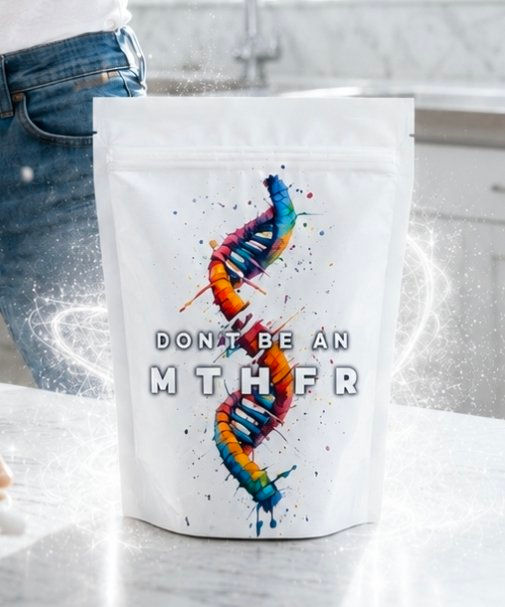
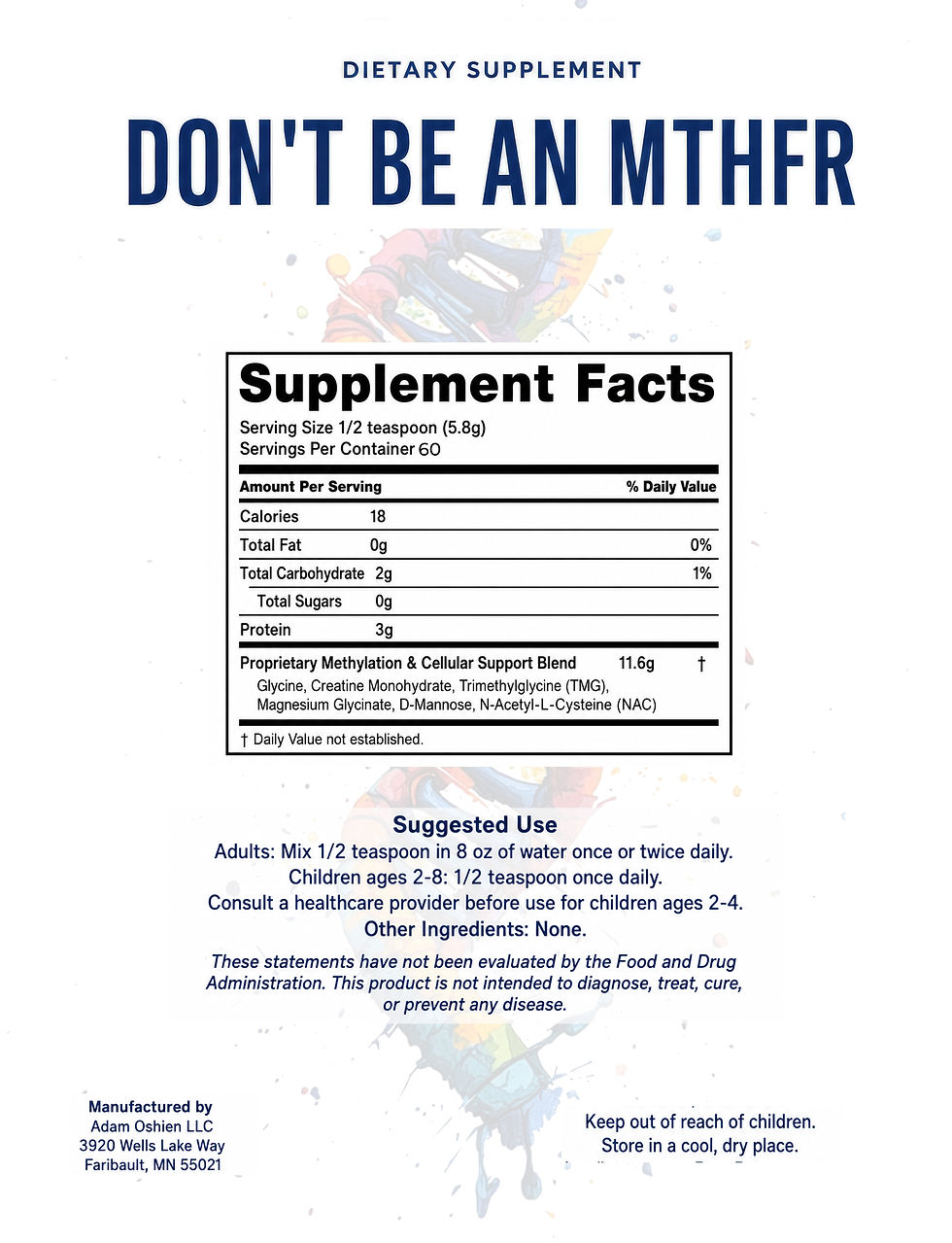
DBAMTHFR has six ingredients. They are listed clearly on the label.
The science behind why those six ingredients work together at the cellular level is throughout this site. Anyone who wants to understand what the formula is — and what it is doing — has what they need to figure that out.
The specific amounts of each ingredient, the ratios between them, the formulation reasoning that took years to settle into its current shape — that part is ours. The science of methylation belongs to everyone. The architecture of this particular formula belongs to us.
Both of those things are true at the same time and neither one requires defending.
We educate on the problem. We protect the solution.
A Quiet Word On Why
Anyone can list six ingredients on a label. Anyone can claim those ingredients support methylation. What separates an effective formula from a marketing collection is the specific decisions made about each ingredient — how much, in what ratios, designed to support which mechanisms in what sequence.
Those decisions are the work. They are also the part that stays in the kitchen. We will discuss the science of methylation, the rationale for each ingredient, the mechanisms involved, and the principles that guided the formulation all day long. We will not publish the architecture itself.
This formula did not get assembled in a weekend. It took years of reading, formulating, testing, and refining to settle into what it is now.
Every gram of every ingredient is where it is for a reason.
Anyone willing to do the same work would arrive at their own answer — not ours.